
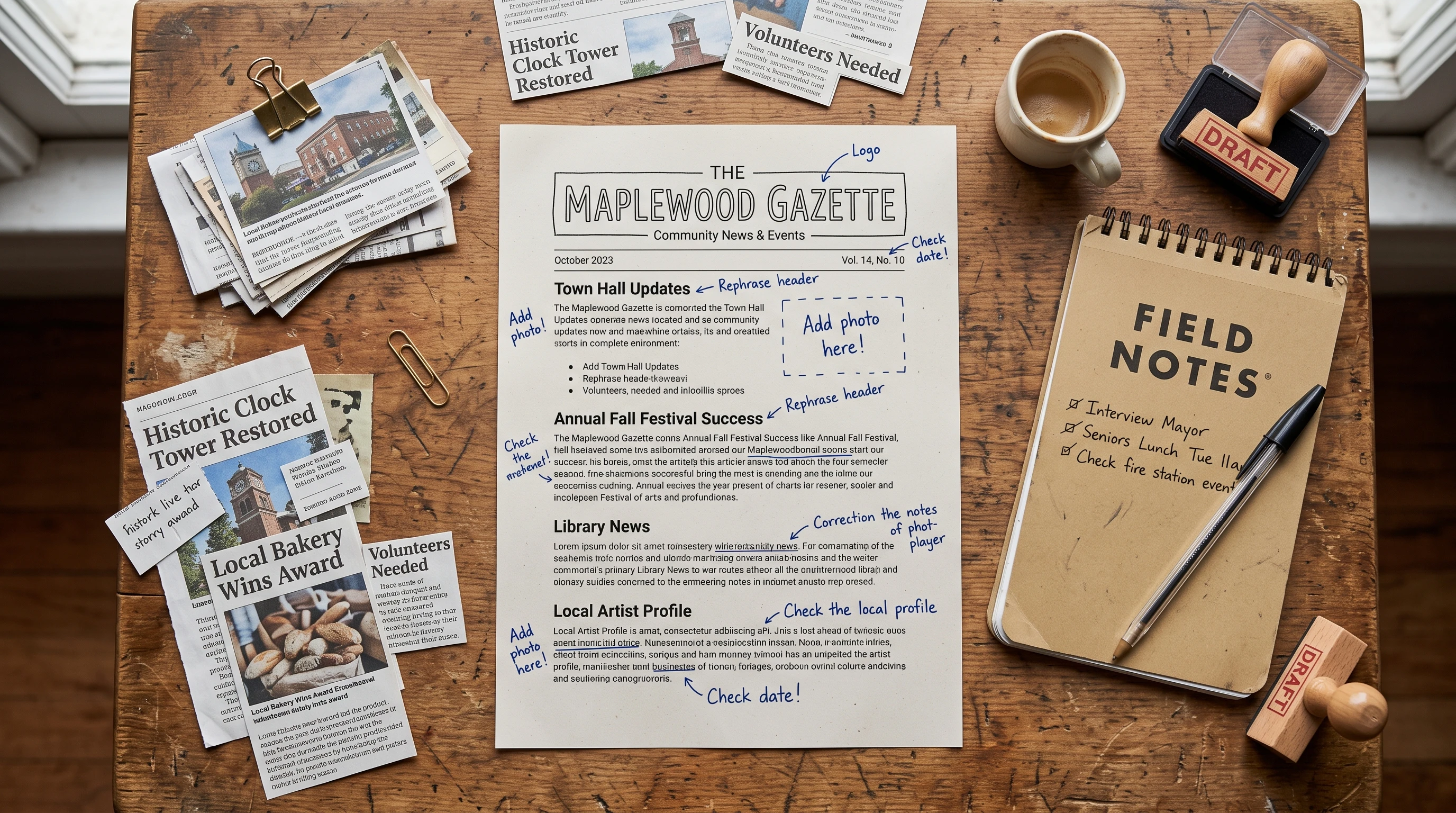
If you’re putting together a local newsletter, you’ll probably find yourself gathering information from all sorts of places… local news stories, city council reports, social media, community forums and even books or personal interviews. Giving proper credit to your sources is really important, both to build trust with your readers and to respect the original creators of the content. I’ve worked on several local newsletters and learning how to credit sources clearly made my workflow easier and helped avoid awkward situations or accidental plagiarism. In this article, I’ll walk you through the best ways to credit sources in a local newsletter, with specific tips to make the process simple and reliable.
Why Crediting Sources in Your Newsletter Really Matters
Citing sources in a local newsletter does more than just cover you from a legal perspective… it also supports your reputation as someone who values honesty and fairness. When I include source credits, people know where the information came from. That means readers can trust what they’re reading and original creators… from journalists to community members… see that their efforts are recognized. If you ever have doubts about whether to credit a source, it’s always a good idea to do so. Not only does this avoid copyright issues, it also encourages others in your area to share information freely and confidently.
Many people see local newsletters as reliable channels for neighborhood news and events. When sources go uncredited or quotations are passed off as original, you risk undermining that trust. Over time, a reputation for transparency leads to growth in your audience and keeps community members coming back for reliable updates.
Types of Sources You Might Use in a Newsletter
Figuring out what kind of sources you’re using is the first step to knowing how to credit them correctly. Here are the most common kinds I come across when putting together a local newsletter…
- News Articles: Information from local newspapers, news websites or radio broadcasts.
- Government Documents: City council updates, meeting minutes or official reports.
- Community Input: Quotes from interviews, opinions shared at local gatherings or survey responses.
- Social Media Posts: Updates from local groups, public Facebook posts or tweets from residents or officials.
- Other Newsletters or Blogs: Snippets or highlights from newsletters covering similar topics in neighboring communities.
- Academic Resources: Research articles or studies with direct relevance to your community.
Different types of sources often require slightly different approaches for proper credit, which I’ll break down next.
How to Credit Sources: Practical Examples
Crediting a source doesn’t need to be complicated or look too formal. In my experience, keeping things simple, clear and direct helps readers understand the context and gives original creators the credit they deserve. Here’s how I usually handle each type of source…
- News Articles or Websites: Include the name of the publication, the journalist’s name (if mentioned) and the date. For example, “According to Jane Smith’s article in the Downtown Gazette (May 2024)…” or add a short note at the end like, “Source: Downtown Gazette, May 2024.”
- Government Documents: Name the department or council and date, for example, “As outlined in the Oakville City Council minutes from April 2024…”
- Community Quotes or Interviews: Mention the full name of the person and, if they agree, include their neighborhood or role. For example, “Mark Evans, a resident of Riverwood, shared his thoughts on parking improvements…” If the person wants to remain anonymous, describe them as generally as possible, such as “a longtime local business owner.”
- Social Media Posts: It’s respectful to ask for permission if quoting a resident or group and always name the platform. For a public post, you can say, “On the Maple Grove Neighbors Facebook group, Emily Jordan posted…” If it’s a tweet, just write, “@OakvilleTraffic tweeted on March 3…” and so on.
- Other Newsletters or Blogs: Name the newsletter or blog and ideally link if your newsletter is digital. For example, “Hometown Happenings newsletter reported last week…”
- Academic Resources: Mention the author, institution and/or publication year. For example, “A 2023 report by the Oakwood Community Health Initiative found that…”
Throughout my projects, I find that brief attributions often fit best, but for sensitive or controversial topics, giving more detail helps clarify why that source was reliable or relevant. When in doubt, you can even add a brief note on why you chose that particular source to help readers get a sense of your process.
Dos and Don’ts for Crediting Sources in Newsletters
Developing a few easy habits makes source crediting quick and effective. Here’s what I keep in mind…
- Do give credit right after the information, either inside the sentence or in parentheses at the end of a paragraph.
- Do use hyperlinks for online sources in digital newsletters.
- Do ask people for permission if you are quoting a private message, email or closed social group.
- Do keep a record of your sources with links or copies in your notes for reference or future questions.
- Don’t copy large portions of text, even with a source given. Summarize instead and then credit.
- Don’t rely only on “according to the internet” or “as seen online.” Be specific so readers can check for themselves.
- Don’t skip credit just because you changed the wording. If the idea or news item is from someone else, mention it.
No one expects perfect academic citations in a local community update, but these simple dos and don’ts help avoid confusion or disputes while making the newsletter more trustworthy.
Common Challenges and Simple Solutions
Sometimes crediting sources in community newsletters can hit snags. I’ve dealt with several and picked up a few tricks along the way…
- Unclear Original Source: If you find information repeated across multiple websites and can’t pin down the original, choose the earliest reliable one you find and say, “First reported by…” or “As discussed on…”
- Multiple Contributors: When several people contributed, try using a group phrase, like “Several local shopkeepers mentioned during the Market Roundtable…”
- Incorrect or Outdated Links: Test your digital links before sending. I always double-check URLs at the end of the editing process.
- Private Conversations: Even in small towns, respect privacy. Always confirm someone agrees to be quoted and credited, especially if their views touch on sensitive topics.
Working through these challenges helps build confidence and ensures your newsletter is friendly, accurate and fair to all contributors. If you’re still unsure, ask a fellow editor for their thoughts or check in with the source directly. Over time, these habits help your newsletter stand out for reliability.
Quick Start Checklist for Newsletter Source Attribution
I like to keep a simple checklist printed near my workspace, so I don’t forget the basics…
- Identify the type of source (news, government, social media, etc.)
- Gather the correct source details (name, date, organization, link)
- Ask for permission if needed
- Write a clear, concise credit statement after each fact or quote
- For digital newsletters, add hyperlinks to sources if possible
- Review all attributions in the editing stage to check clarity and accuracy
Following this checklist keeps things running smoothly and saves time during deadline crunches. Over time, it will become a routine part of your workflow, so you can focus on gathering the best community stories and updates.
Examples of Source Credit in Real World Newsletters
When I started, I learned a lot from seeing what other successful newsletters were doing. Here are sample lines you can adapt for your own newsletter…
- “The city’s tree planting initiative, detailed in last month’s Oakville Park Report, aims to increase green space downtown.”
- “According to a tweet from @OakvilleFarmersMarket on April 10, the Saturday market will have extended hours through July.”
- “‘We’re excited to welcome new volunteers,’ says Maria Lopez, who organized the Maplewood Cleanup Day.”
- “For a deeper jump into the council’s decision, see the full meeting minutes available on Oakville.gov.”
Adjusting these examples for your newsletter helps you create a consistent style and saves time as you become more familiar with source attributions.
Frequently Asked Questions
Some questions around source credit come up again and again. Here are a few I hear most often, with clear answers…
How formal do newsletter source attributions need to be?
In most cases, a short and clear mention in the article works fine. Stick to the same style throughout the newsletter for a polished look.
Can I use someone’s social media post without asking?
If the post is public and you give credit, it’s usually okay, but I always reach out first when possible. If the post is from a private group or personal account, always ask for permission.
What if I forgot to credit a source?
If you spot it before publishing, just add the credit. If it gets published already, acknowledge the omission in the next issue and give the correct credit. Transparency builds trust.
Do I need to credit information that is common knowledge?
No, if it’s something widely known and easily checked, like “Oakville is located by Lake Ridge,” credit isn’t needed. When in doubt, err on the side of caution and mention your source.
Final Tips for a Reliable and Transparent Newsletter
Crediting sources in your local newsletter may feel like a small step, but it’s one of the best ways to build trust, promote accurate communication and show respect to your community. I make it a regular practice and the positive feedback from readers and contributors is worth the extra effort. Remember, clear source credit doesn’t need to slow down your work. Instead, it helps your newsletter shine as a trusted voice everyone can depend on. The more you get used to crediting, the more natural it becomes and your reputation for honest reporting will keep growing along with your readership.
I enjoyed reading this because proper source attribution is one of those topics that doesn’t seem exciting until you start publishing your own content. Then you quickly realize it’s an important part of building credibility. Readers are much more likely to trust what they’re reading when they can see where the information came from, and giving credit to the original source is simply the right thing to do.
One point that really stood out to me was your advice to summarize instead of copying. I think that’s an important distinction. Summarizing information in your own words while clearly crediting the source not only respects the original creator but also shows that you’ve actually understood the material instead of just repeating it.
– Scott